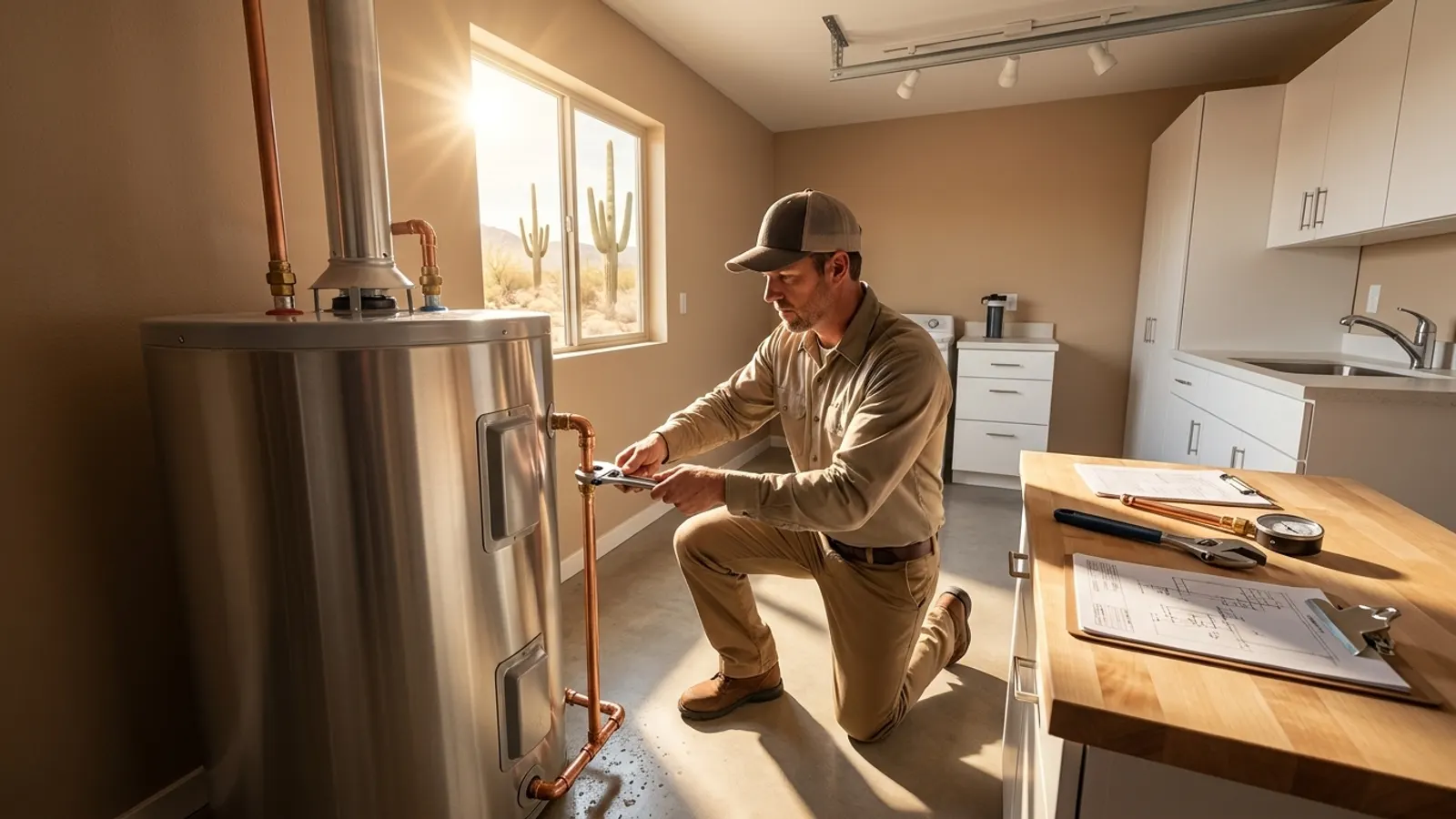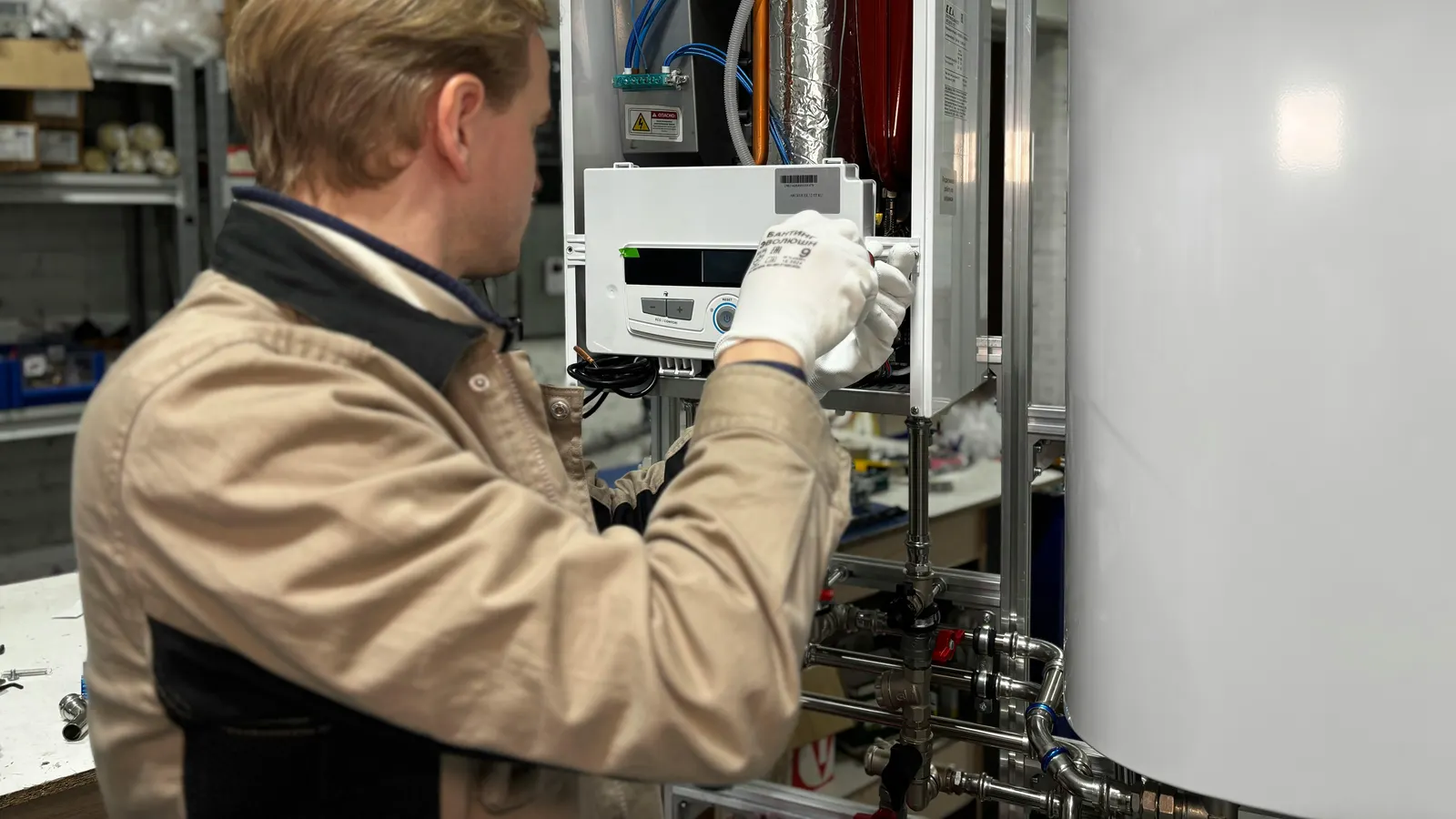
How to Flush a Water Heater (and Why Mesa Homes Need It More Often)
A step-by-step water heater flush, plus why Arizona hard water means once a year is the floor, not the target. When to do it yourself and when to call.
By JB Water & Air · September 2, 2026 · 5 min read
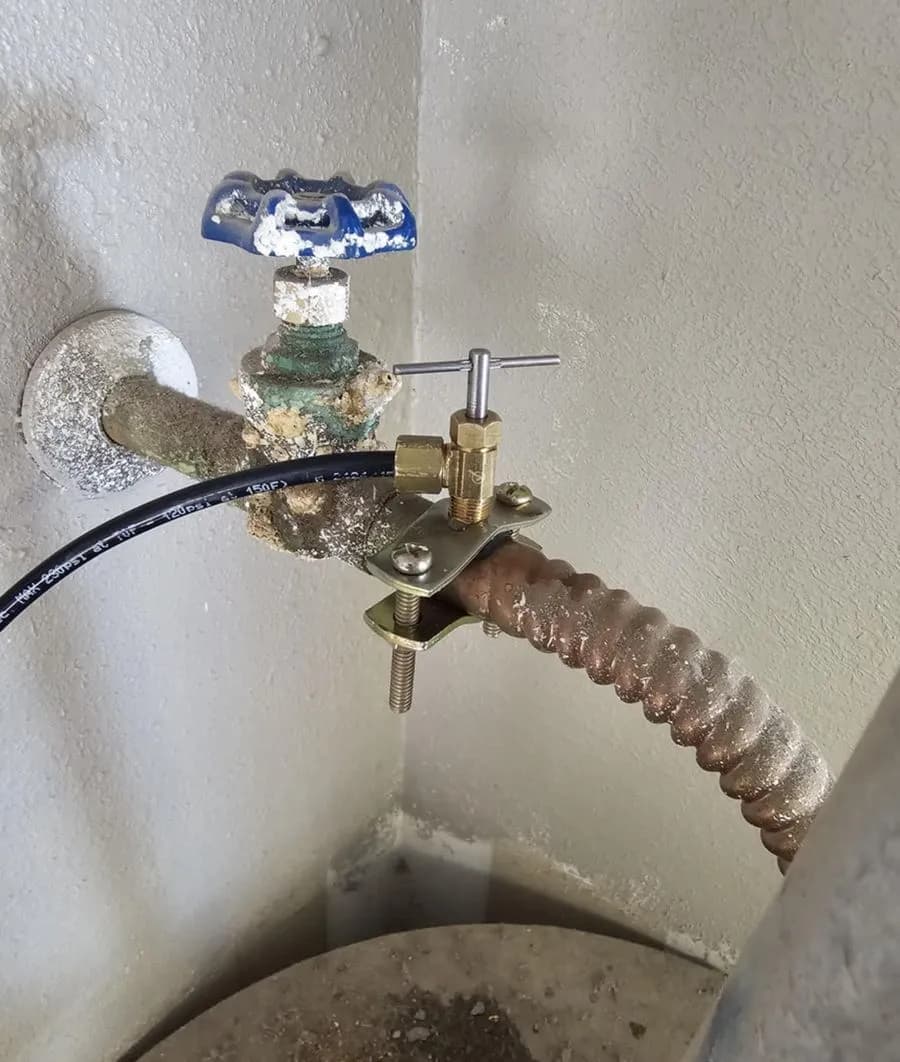
The short version: Shut off the power or gas, close the cold inlet, run a hose from the drain valve to somewhere safe, open a hot tap, and drain the tank until the water runs clear. In Mesa, do this at least once a year — the mineral load in Valley water builds sediment faster than the manufacturer's schedule assumes.
Why this matters more here than it does elsewhere
Every water heater collects sediment. Minerals suspended in the water drop out as it heats and settle on the bottom of the tank, where the burner is.
The difference in the Valley is how fast that happens. Arizona water is hard — you already know it from the spots on the glassware and the film on the shower door. That same mineral content is landing in the bottom of your water heater every single day.
Once the layer is thick enough, it acts as insulation between the burner and the water. The burner runs longer to reach the same temperature, the bottom of the tank runs hotter than it was designed to, and you pay for both — first in the gas bill, then in a tank that gives up years early.
You can often hear it before you see it. A popping or rumbling sound when the burner fires is steam escaping from under the sediment layer.
What you will need
- A garden hose long enough to reach a drain, a driveway, or somewhere the water can go safely
- A flathead screwdriver or a hose bib key, depending on your drain valve
- A bucket
- Somewhere to send several gallons of hot, dirty water that will not scald anything or wash out landscaping
Step by step
1. Turn off the heat
Gas: set the thermostat dial to "Pilot" or "Vacation". Electric: switch the breaker off. This one is not optional — energising the elements in a drained tank destroys them in minutes.
2. Shut the cold water inlet
There is a valve on the cold line at the top of the tank. Close it.
3. Let it cool
The water in there is somewhere around 120°F and it will burn you. An hour or two of cooling makes this a much less dangerous job. If you cannot wait, be extremely careful with what comes out of that hose.
4. Connect the hose and open a hot tap
Thread the hose onto the drain valve at the base of the tank and run the other end somewhere safe. Then open a hot water tap somewhere in the house and leave it open — that breaks the vacuum so the tank will actually drain instead of gurgling.
5. Open the drain valve
Let it run. The first water out will be cloudy and may carry visible grit. Keep going until it runs clear — usually several minutes, longer if it has been a while.
If the flow slows to a trickle, sediment has plugged the valve. Briefly opening the cold inlet can push the blockage through. If that does not clear it, stop and call someone.
6. Rinse the tank
With the drain still open, open the cold inlet for a minute or two and let fresh water stir up what is left on the bottom. Close the inlet, let it drain again, and repeat until it comes out clean.
7. Refill before you restore heat
Close the drain valve, remove the hose, open the cold inlet, and leave that hot tap open until water runs steadily with no sputtering. That means the tank is full. Only then relight the pilot or switch the breaker back on. Firing a dry or half-full tank is how elements burn out and how a gas tank gets damaged.
When to stop and call a plumber
Doing this yourself is reasonable on a healthy tank. These are the moments to stop:
- The drain valve will not close afterwards. Plastic drain valves are common and they fail. You now have a slow leak that will not stop on its own.
- The water never runs clear, or barely runs at all. That is a lot of hardened sediment, and it may need to be broken up properly.
- You find moisture around the base of the tank. That is a tank leak, and no amount of flushing fixes it.
- The tank is over ten years old and has never been flushed. Sediment can be sitting on top of corrosion it has been hiding. It is better for that to be found by someone who can fix it the same day.
If any of that describes your situation, water heater service is what we do, and someone at JB answers the phone at any hour.
The part most people miss: fix the water, not just the tank
Flushing treats the symptom. The mineral content in the water is the cause, and it is not only affecting the water heater — it is in the fixtures, the dishwasher, the washing machine, and every faucet in the house.
That is the reason this company exists at all. In 1981 John Bevell bought a water distiller for his wife's health, started recommending them to neighbours, and grew that into a business serving more than 800 customers before it ever became a full plumbing and HVAC contractor. Four decades later, water treatment — softeners, filtration and reverse osmosis — is still the thing we know best.
A softened supply does not eliminate maintenance. It does slow the sediment down considerably, and it takes the same load off everything else water touches in the house.
A realistic schedule for a Mesa home
| Task | How often | Who |
|---|---|---|
| Flush the tank | Once a year minimum, twice is better | You, or us |
| Check the T&P relief valve | Once a year | You |
| Inspect the anode rod | Every 3 years | A plumber |
| Check connectors and the base for moisture | Whenever you flush | You |
Put the flush on the calendar next to something you already do seasonally. The tank will last longer, it will cost less to run, and you are far less likely to meet it for the first time on the morning it fails.
Need a hand with any of it? Get a quote or call and we will talk it through.
Frequently asked questions
- How often should I flush a water heater in Arizona?
- At least once a year, and twice a year is a reasonable target in the Valley because hard water accelerates sediment buildup. The manufacturer's once-a-year guidance assumes softer water than most Mesa homes have.
- Can I flush a water heater myself?
- Often yes, on a healthy tank with a working drain valve. Stop and call a licensed plumber if the drain valve will not close afterwards, if the water never runs clear, or if you find moisture around the base of the tank.
- What happens if you never flush a water heater?
- Sediment collects on the bottom of the tank, insulating the burner from the water above it. The tank works harder for the same hot water, the bottom overheats, and the unit tends to fail earlier than it should.
- Will flushing an old water heater cause a leak?
- It can. On a tank that has gone many years without service, sediment sometimes plugs a spot that was already corroded, and disturbing it reveals the leak. That is a sign of an existing problem, not a reason to keep skipping maintenance — but it is a good reason to have an old tank flushed by someone who can deal with what turns up.