HVAC Maintenance Checklist for Mesa AZ Homeowners: 10 Things to Do Before Summer 2026
Table of Contents Why Pre-Summer HVAC Prep Matters in Mesa The 10-Item HVAC Maintenance Checklist 1. Replace Your Air Filter 2. Clean the Condenser Coils…
By JB Water & Air · May 12, 2026 · 10 min read
Table of Contents
- 2. Clean the Condenser Coils
- 3. Clear the Area Around the Outdoor Unit
- 4. Check and Clean the Condensate Drain Line
- 5. Test Your Thermostat
- 6. Inspect Your Ductwork for Leaks
- 7. Check Refrigerant Lines for Wear
- 8. Inspect Electrical Connections and Capacitors
- 9. Lubricate Moving Parts
- 10. Schedule a Professional Tune-Up
Mesa summers don't ease you in. Temperatures push past 110°F, your AC runs almost continuously from June through September, and if something breaks in July, you're not just uncomfortable — you're dealing with a real health risk while every HVAC company in the East Valley is already slammed.
The smartest move you can make right now is running through a pre-summer checklist before the heat arrives. Some of these steps you can handle yourself in an afternoon. Others are worth handing off to a licensed technician. Either way, doing them now beats scrambling when your system quits on a 112-degree Tuesday.
Here's exactly what to check.
Why Pre-Summer HVAC Prep Matters in Mesa
Arizona is genuinely harder on HVAC systems than almost anywhere else in the country. Your unit runs longer hours, fights higher outdoor temperatures, and battles fine desert dust that clogs filters and coats coils faster than you'd expect coming from a milder climate.
A system that hasn't been touched since last fall is carrying a full season of wear into the most punishing stretch of the year. A clogged filter alone can restrict airflow enough to cause the system to freeze up or overheat. Throw in a dirty condenser coil and a low refrigerant charge, and you've got a breakdown waiting to happen at the worst possible time.
In Mesa, pre-summer maintenance isn't optional. It's just part of owning a home here.
The 10-Item HVAC Maintenance Checklist
1. Replace Your Air Filter
Simple, cheap, and one of the most impactful things on this list. A dirty filter chokes airflow, forces your system to work harder than it should, and drives up your energy bill in the process. In Mesa, most homes need a fresh filter every 30 to 60 days during peak season — not every 90 days like the packaging often suggests.
Put in a new filter before summer starts. Write the date on the side so you know exactly when it's due again.
2. Clean the Condenser Coils
Your outdoor unit pulls air across the condenser coils to push heat out. When those coils are coated in dust, pollen, and desert debris — which happens quickly out here — your system has to work much harder to do the same job. That means higher energy costs and extra strain on the compressor.
You can rinse the coils gently with a garden hose, spraying from the inside out if possible, but be careful not to bend the fins. If they're heavily fouled, a technician can clean them more thoroughly without causing damage.
3. Clear the Area Around the Outdoor Unit
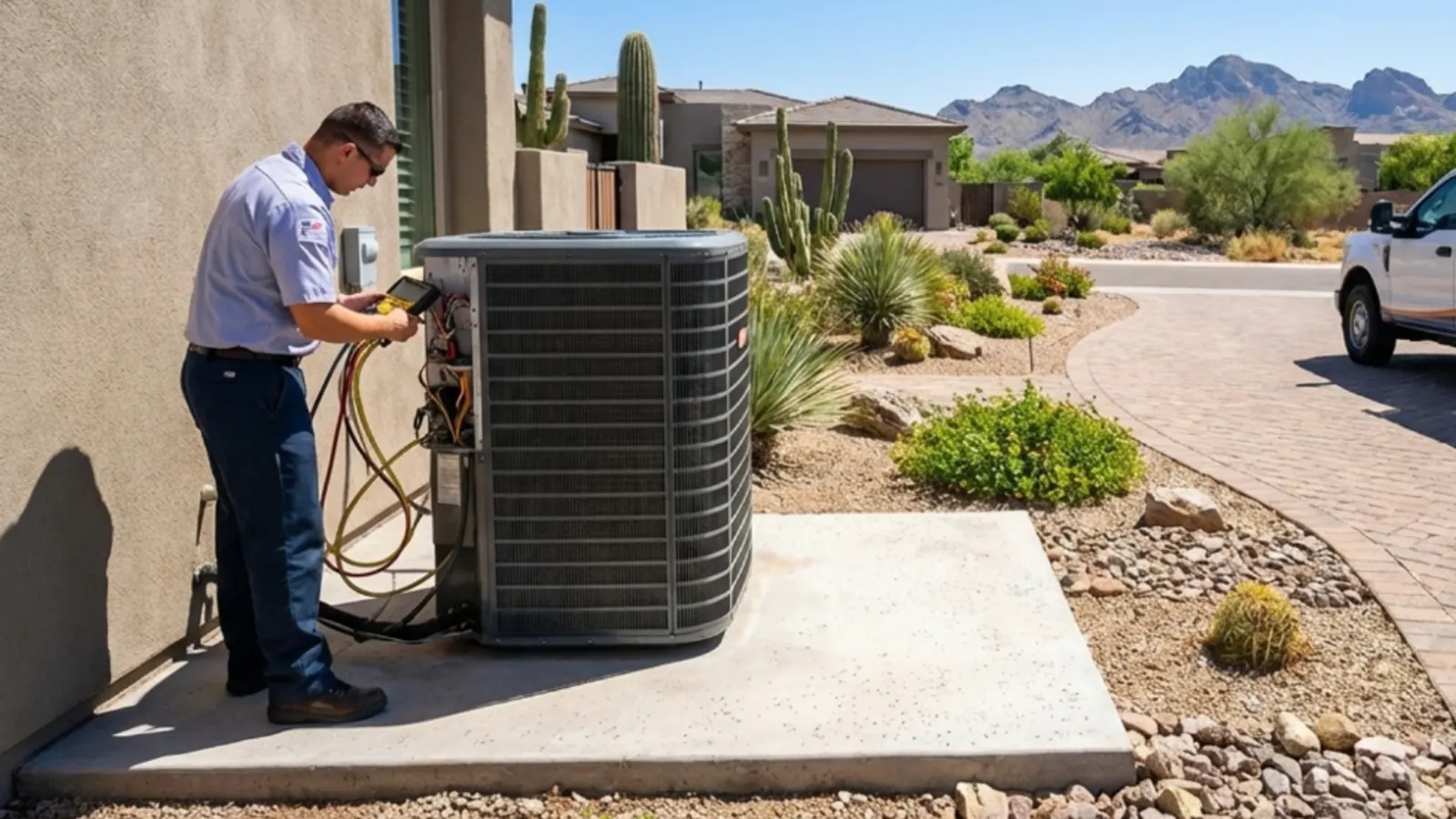
Walk outside and take a look at your condenser unit. Anything within two feet of it — shrubs, stored items, debris, dead vegetation — can restrict airflow and cause the unit to overheat.
Trim back any plants, move anything stored nearby, and clear out whatever's built up around the base. Your unit needs open airflow on all sides to do its job efficiently.
4. Check and Clean the Condensate Drain Line
As your AC cools your home, it pulls moisture out of the air and drains it through a condensate line. In Arizona, that line can develop algae or mold buildup over time — and a clog means water backing up into your home, damaging ceilings, walls, and flooring.
Pouring a cup of diluted white vinegar into the access port near the air handler helps prevent buildup. If you notice standing water near the air handler or your system shuts off unexpectedly, the drain line may already be blocked. At that point, call a plumber or HVAC tech.
5. Test Your Thermostat
Switch your thermostat to cooling mode and set it a few degrees below the current room temperature. Your system should kick on within a minute or two. If it doesn't, check the batteries and settings first, then look at your breaker panel.
If your thermostat is more than 10 years old, it's worth considering an upgrade to a programmable or smart model. You'll get better control over your system and can cut energy use during the hours when no one's home.
6. Inspect Your Ductwork for Leaks
Leaky ducts are more common than most homeowners realize, especially in older Mesa homes — and they're a significant source of wasted energy. Cooled air escapes into unconditioned attic space instead of reaching your living areas, so your system runs longer just to hit the set temperature.
Check accessible duct runs for obvious gaps or disconnected sections. Small gaps can be sealed with HVAC foil tape (not regular duct tape, which breaks down fast in the heat). For a thorough assessment, a technician can run a duct leakage test.
7. Check Refrigerant Lines for Wear
The insulated copper lines running from your outdoor unit into the home carry refrigerant. Take a look at the insulation — it should be intact, not crumbling or missing in spots. Damaged insulation reduces efficiency and can cause the lines to sweat or freeze.
Checking the actual refrigerant level isn't a DIY task — it requires a licensed technician with the right equipment. But if your home is taking noticeably longer to cool than it used to, low refrigerant is one of the first things a tech will check.
8. Inspect Electrical Connections and Capacitors
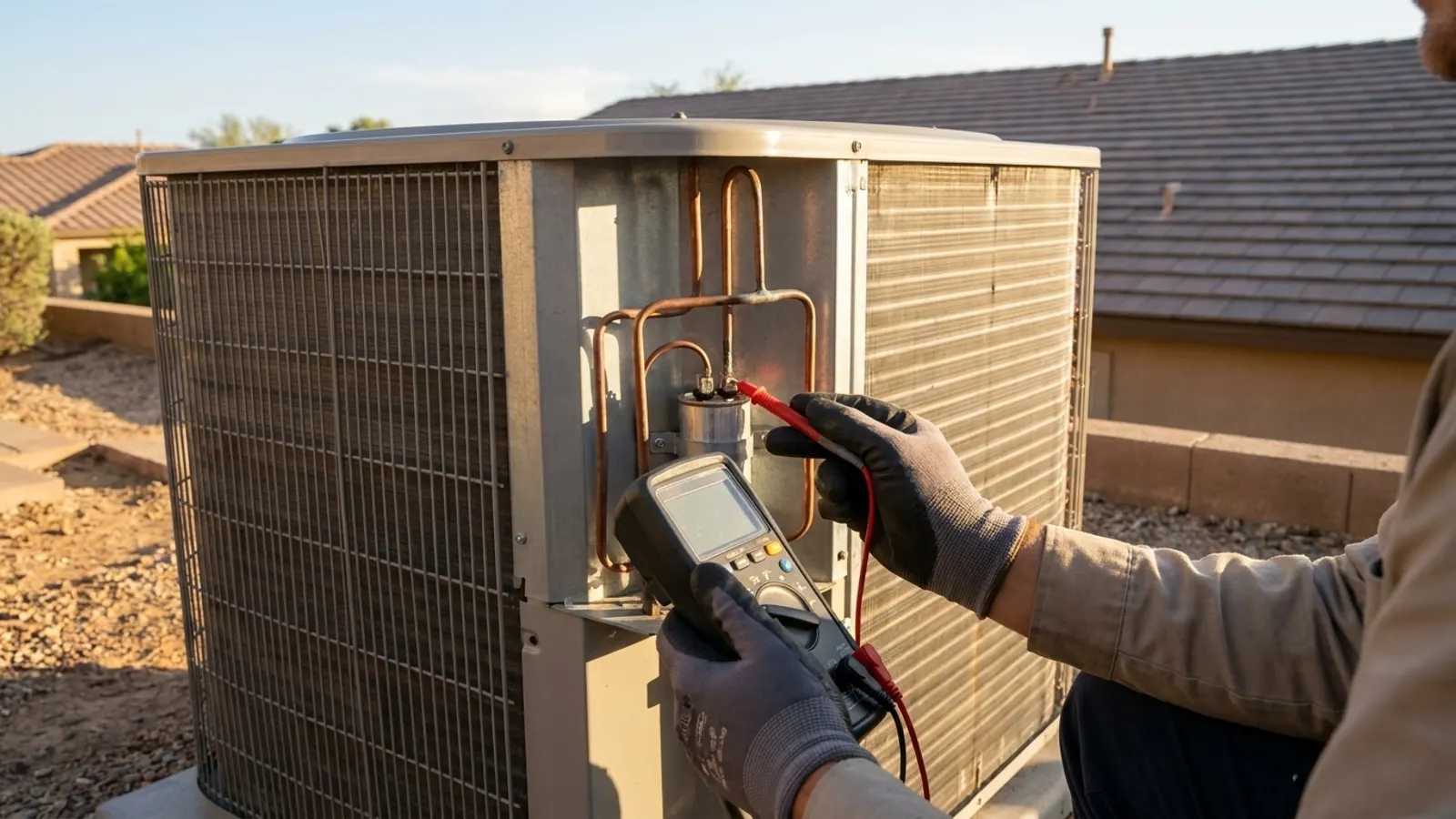
Capacitors help your AC motor start and keep running. They're one of the most common failure points in Arizona, largely because heat degrades them faster than in cooler climates. A weak capacitor often shows up as the system struggling to start, making a humming noise, or shutting off shortly after it kicks on.
This one isn't DIY territory. Capacitors hold an electrical charge even when the unit is off and can cause serious injury if handled without proper training. Have a licensed technician check them and tighten any loose electrical connections during a tune-up.
9. Lubricate Moving Parts
Your air handler's blower motor and fan run for thousands of hours each summer. Some motors have oil ports that should be lubricated annually to reduce friction and extend their life. Others are sealed and need nothing.
Check your system's documentation or ask your technician whether your motor needs lubrication. It's a small step that can prevent a motor failure in the middle of August.
10. Schedule a Professional Tune-Up
The steps above cover what you can reasonably handle yourself. A professional tune-up goes further: refrigerant charge measurement, electrical testing, thorough coil cleaning, safety controls check, and a full system performance evaluation.
In Mesa, May is the right time to book this. Technicians still have availability, and you have time to address anything that comes up before the heat peaks. Wait until June and you're competing with everyone else who waited.
Our team at JB Water & Air has been handling pre-summer tune-ups for Mesa homeowners for over 40 years. We know what Arizona summers do to these systems — and we know what to catch before it turns into a problem.
Don’t Forget Your Plumbing Before Summer
HVAC gets most of the pre-summer attention, but your plumbing deserves a look too. Arizona's hard water is tough on pipes, water heaters, and fixtures year-round, and a few quick checks now can save you a headache later.
- Water heater: Hard water sediment builds up over time, reducing efficiency and shortening the life of your unit. If yours is 8 or more years old and hasn't been flushed recently, now's a good time.
- Reverse osmosis system: If you have an RO system, check when the filters were last changed. Most need annual service. Our team handles RO filter changes quickly and at a fair price.
- Outdoor hose bibs and irrigation connections: Look for drips or slow leaks before your irrigation system starts running daily all summer.
- Under-sink connections: Spend a few minutes checking under kitchen and bathroom sinks for any signs of moisture or slow drips.
A small plumbing issue caught in May is a quick fix. The same issue discovered in July — when every plumber in the East Valley is booked out — is a much bigger deal.
When to Call a Pro vs. DIY
| Task | DIY-Friendly | Call a Pro |
|---|---|---|
| Replace air filter | Yes | |
| Rinse outdoor unit | Yes (carefully) | |
| Clear debris around unit | Yes | |
| Pour vinegar in drain line | Yes | |
| Test thermostat | Yes | |
| Seal small duct gaps with foil tape | Yes | |
| Check refrigerant charge | Yes | |
| Inspect/replace capacitors | Yes | |
| Full electrical inspection | Yes | |
| Coil deep cleaning | Yes | |
| Duct leakage testing | Yes | |
| Water heater flush | Yes |
The DIY steps are genuinely worth doing — they cost nothing and take less than an hour. But the professional items on that list involve either real safety risks or specialized equipment. Refrigerant and capacitors aren't worth experimenting with.
FAQs
How often should I have my HVAC system serviced in Mesa, AZ? Once a year before summer is the minimum. Because Arizona summers are so long and intense, homeowners with older systems often benefit from a second check in early fall as well. Annual maintenance catches small issues before they turn into expensive failures.
What's the most common HVAC problem in Arizona summers? Capacitor failure is one of the most frequent issues our technicians see in Mesa homes. The intense heat degrades them faster than in cooler climates. Dirty condenser coils and clogged air filters are also very common — and both are easy to prevent with regular maintenance.
Can I run my AC before having it serviced? Yes, but pay attention to how it's performing. If it's cooling well, running quietly, and keeping up with the thermostat, it's probably fine. If it's struggling to cool, making unusual noises, or cycling on and off more than it should, get it looked at before the heat peaks.
How does Mesa's hard water affect my HVAC or plumbing? Hard water primarily affects plumbing rather than HVAC directly. It causes mineral buildup in water heaters, pipes, and fixtures that reduces efficiency and shortens equipment life. A reverse osmosis system addresses water quality at the tap, and regular water heater maintenance helps manage sediment buildup over time.
When is the best time to schedule an HVAC tune-up in the East Valley? March through May is the sweet spot. Technicians have more availability, and you have time to deal with anything that comes up before the hottest months hit. By June, schedules fill fast and you may be waiting days for an appointment during a heat wave.
How long does a professional HVAC tune-up take? Most residential tune-ups take between one and two hours, depending on the system's age and condition. Your technician will inspect, clean, test, and document the system's performance during that visit.
What should I do if my AC stops working in the middle of summer? Call a local company that offers same-day or emergency service. Start by checking your air filter — a completely blocked filter can cause the system to shut down — and make sure your thermostat is set correctly and your breaker hasn't tripped. If those basics check out, you need a technician on-site.
Get Ready Before the Heat Hits
Working through this checklist takes a couple of hours and could save you a miserable week in July. Replace the filter, clear the outdoor unit, test the thermostat, and call a licensed technician for the items that need professional hands.
If you're in Mesa, Gilbert, Chandler, or Tempe and want a team that knows Arizona systems inside and out, we're ready to help. JB Water & Air has been doing this for 40+ years, we hold a 4.9-star rating from 490 Google reviews, and we offer same-day service when you need it fast.
Check our current deals at jbwaterandair.com/hot-offers or call us at (480) 498-8960 to get your pre-summer tune-up on the calendar before spots fill up.
Why Maintenance Pays Off: The Numbers
ENERGY STAR recommends checking your air filter every month and replacing it at least every 3 months — a dirty filter is the #1 cause of poor cooling in Mesa homes. ENERGY STAR–certified air conditioners use about 8% less energy than conventional new models, and replacing a unit that’s more than 10 years old can cut cooling costs by up to 30%.