Water Softener vs Filter in Mesa: Which Do You Need?
Not sure whether you need a water softener or water filter in Mesa, AZ? Learn the key differences, costs, and which solution is right for your home's…
By JB Water & Air · April 3, 2026 · 19 min read
Summary
JB Water & Air breaks down whether your Mesa home needs a softener to stop the 17-grain hardness wrecking heaters and fixtures or a filter to strip chlorine and contaminants. We test free same day and install neighbor trusted gear so your water tastes great, appliances last longer, and your towels stay fluffy without the crust.
Mesa’s Tap-Water Reality: Why the Choice Matters
Mesa’s tap water is so mineral-heavy it quietly ruins your appliances, dulls your laundry, and even flattens your morning coffee–yet staying safe is costing you thousands unless you intervene.
Hard-water headaches Valley homeowners feel every day
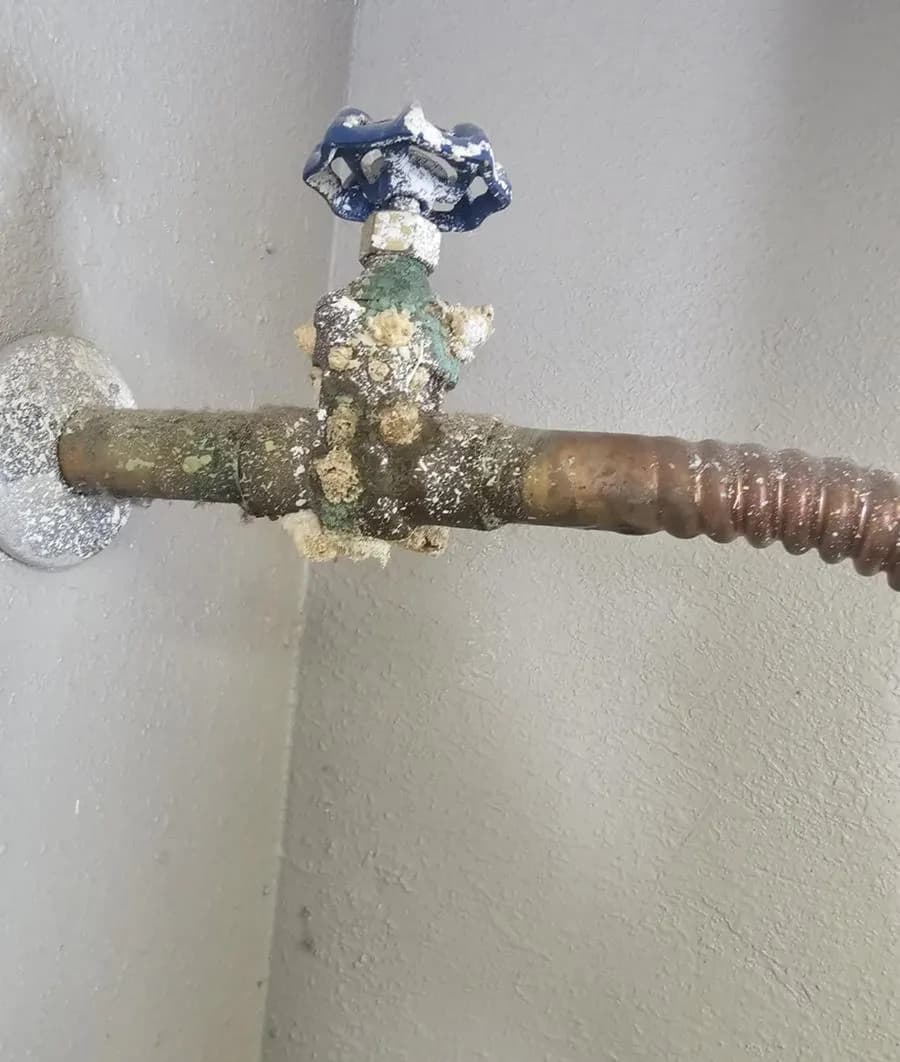
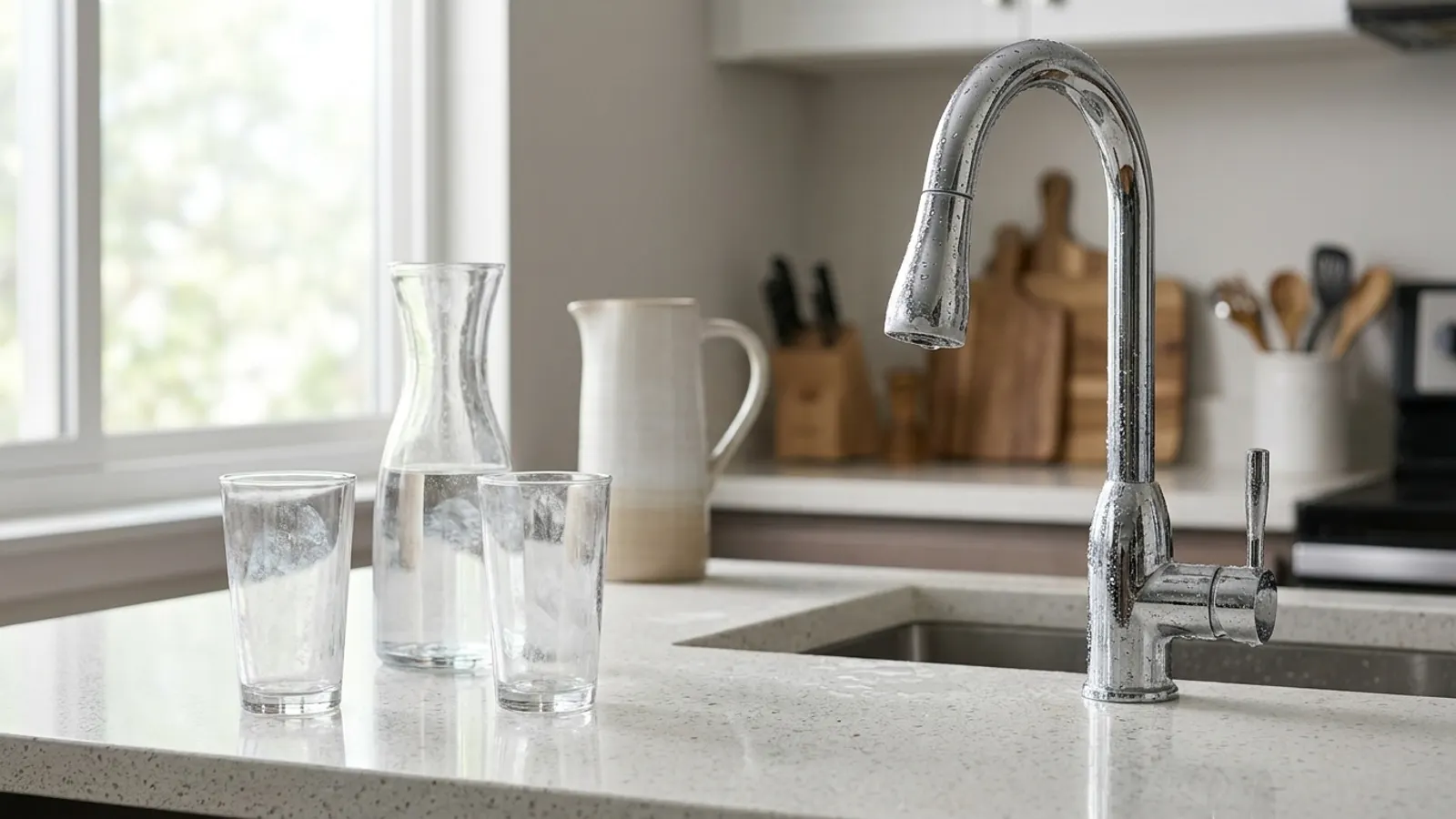
Walk into any Mesa kitchen and you’ll spot the tell-tale signs: chalky white crust on faucets, spots on “clean” glassware, and a filmy ring around the sink that reappears within hours of scrubbing. These aren’t housekeeping failures–they’re postcards from water that carries up to 17 grains of hardness per gallon, nearly three times the national average for municipal supplies.
The frustration multiplies in showers where soap refuses to lather and instead rolls into stubborn curds that cling to tile and skin alike. Homeowners report buying premium detergents and rinse aids, only to watch dishes emerge cloudy and streaked the moment they dry.
Even morning coffee tastes off; minerals bind with flavorful acids, flattening the profile that roasters worked to perfect. Over time, the nuisance becomes expensive–towels stiffen, colors fade, and every load of laundry feels like it’s been washed in beach sand.
The dissolved minerals and chlorine that slip past city treatment
Mesa’s municipal plants do an excellent job meeting federal safety standards, yet the rules allow hardness minerals and chlorine disinfectants to remain at levels that annoy plumbing and people. Calcium and magnesium ride the pipeline straight from the Verde and Salt rivers into neighborhood laterals, while chlorine stays behind to keep bacteria at bay during the 30-mile journey.
These additives are necessary for regional safety, but they spell trouble once inside home pipes. Chlorine dries rubber gaskets, fades plastic components, and produces that faint swimming-pool aroma every time a tap opens.
Meanwhile, the same minerals that strengthen bones turn into micro-abrasives inside copper or PEX lines, grinding away at elbow joints and valve seats long before expected replacement cycles.
Appliance life: how untreated water shortens dishwashers & water heaters
Hard water is silent currency for appliance manufacturers. Each grain of hardness leaves roughly 1.25 milligrams of limescale per liter of hot water; over a year, a 50-gallon water heater baking at 120°F can accumulate two pounds of rock, coating elements and forcing them to run longer cycles. Dishwashers suffer equally.
Spray arms clog with gritty deposits, sensors misread turbidity, and heating elements operate through an insulating crust that drives up energy use by 15-20 percent. Manufacturers rate standard units for 8-10 years, yet Mesa customers often see pump failures in year six. Tankless units marketed as “endless hot water” can fail even sooner; narrow heat-exchanger channels are prime real estate for scale, and a 0.1-inch buildup can reduce efficiency by 11 percent.
Replacement costs average $2,400–an expense that starts with invisible minerals, not defective engineering.
Skin, hair, and laundry: the hidden cost of “just okay” water
Hardness minerals combine with soap to form a waxy residue that lodges in pores and hair cuticles. Dermatology clinics across the Valley report a 30 percent uptick in eczema and dry-skin complaints among new residents within their first dry season. Hair loses its sheen as mineral crystals rough up the outer keratin layer, leaving strands dull, brittle, and resistant to color treatments.
Stylists recommend clarifying shampoos, yet the fix is temporary; the next shower redeposits the same culprits. Laundry pays a parallel price. Towels wick less water, microfiber cloths lose dust-grabbing power, and whites yellow despite bleach.
Over five years, a family of four can spend an extra $600 on soaps, fabric softeners, and early clothing replacement–an invisible tax on “normal” tap water.
Local lab data–what JB Water & Air finds in Mesa pipes
Our technicians collect samples during routine service calls, and in-house lab strips consistently measure 12-18 gpg hardness citywide. Chlorine readings hover between 0.8-1.2 ppm–legal but noticeable to taste buds and rubber parts.
Sediment counts spike after canal maintenance, with flushed silt showing 8-12 NTU (nephelometric turbidity units) for days. Iron and manganese ride along, staining porcelain and pushing metallic tastes into drinking water. Perhaps most telling is the variation within subdivisions; a Mesa neighborhood near US-60 and Val Vista can register 15 gpg while a pocket just south of Baseline drops to 9 gpg. These micro-zones explain why one household battles crusty faucets while a neighbor two blocks away sees none–precise data lets us match solutions to actual conditions rather than ZIP-code guesses.
What a Water Softener Actually Does (and Doesn’t)
A salt-based water softener swaps out the calcium and magnesium that ruin your fixtures for a trace of sodium, giving you sudsy showers and longer-lived appliances–just don’t expect it to filter chlorine or iron.
Ion-exchange 101–no chemistry degree required
A water softener is essentially a tiny chemistry lab tucked beside your water heater. Inside the tank, resin beads carry a negative charge that grabs positively charged calcium and magnesium–the minerals that create crusty faucets and stiff laundry–and trades them for harmless sodium or potassium ions. The process, called ion exchange, happens in milliseconds every time you open a tap, so your glass fills with silky water instead of mineral-rich liquid.
Think of the resin as a crowded elevator: calcium and magnesium squeeze in, then sodium politely exits so the unwanted passengers can ride until the next regeneration cycle. When the beads fill up with hardness minerals, the system flushes them down the drain and recharges itself with a salty brine, ready for another few days of softening. The result is water that won’t leave chalky rings on your countertops or slash the life span of your dishwasher’s heating element.
The beauty of ion exchange is that it targets only the minerals responsible for scale; it does not filter out chlorine, iron, or bacteria. That specificity is why many Mesa households pair a softener with a separate filtration unit, letting each tool do its specialized job without overlap.
Salt vs. salt-free softeners: Mesa families’ pros & cons
Traditional salt-based softeners dominate Mesa garages because they have a four-decade track record of eliminating hardness down to zero grains per gallon. Homeowners notice soap suds return in the shower, towels feel fluffier, and water heaters recover efficiency lost to rock-solid scale. The downside is the monthly ritual of hauling 40-pound salt bags and the need for a nearby electrical outlet and drain line.
Salt-free conditioners, often marketed as “softeners,” use template-assisted crystallization to convert calcium into microscopic crystals that won’t stick to pipes. They’re slim, require no electricity, and appeal to residents who prefer a sodium-free sip or face medical sodium restrictions. Yet they leave the minerals in the water, so spotting on glassware may persist and true “soft” feel is elusive.
For a typical four-bedroom Mesa household of four, the annual operating cost of a salt system runs about $120 in pellets plus a modest increase in water usage during regeneration. Salt-free cartridges, by contrast, cost $200-$300 every one to two years but do nothing to protect appliances if iron or manganese lurks in the well supply. JB Water & Air techs test first, then recommend the approach that matches both water chemistry and lifestyle preferences.
Where the softener gets installed and how big it needs to be
Installation happens at the point where the main water line enters the home, usually just after the shut-off valve and before the water heater. This placement ensures every drop destined for showers, ice makers, and washing machines passes through the resin tank. A nearby floor drain or utility sink is mandatory for the periodic backwash, and a 110-volt outlet powers the digital valve head that tracks gallons used.
Sizing is dictated by daily grain capacity, not bedroom count alone. A family of four in Mesa with 18-grain-hard water needs roughly 32,000 grains of capacity to avoid regenerating every other night. JB Water & Air pairs a 1-cubic-foot resin tank with a high-flow valve for most three-bedroom homes, stepping up to 1.5 cubic feet for larger houses or irrigation systems tied to the same line.
Garage corners or water-heater closets work fine, but attics and crawlspaces are off-limits due to salt-loading hassles and temperature extremes. Mesa’s winter lows rarely freeze pipes, yet UV rays can warp plastic valve heads, so shade or a simple cover extends the electronics’ life well past the ten-year mark.
Maintenance myths: how often you’ll really add salt
The biggest myth is that you’ll pour salt every week. In reality, a properly sized unit serving four people regenerates every three to five days, consuming about eight pounds of salt and forty gallons of water per cycle. Forty-pound bags last six to eight weeks, so checking the brine tank monthly is plenty; a low-salt alarm on modern valves beeps when the level dips below the waterline.
Another misconception is that evaporated salt crystals are better than rock or pellet forms. Any clean, high-purity salt works, but pellets dissolve more evenly and leave less sediment at the bottom of the tank. If you spot a crusty “salt bridge,” a quick poke with a broom handle breaks the dome and lets brine form again–no service call needed.
Resin beads themselves last eight to twelve years in Mesa’s chlorinated supply before they lose their swap-ability. Annual sanitization with a quarter-cup of household bleach keeps bacteria from colonizing the brine tank, while a five-minute valve cleaning prevents iron fouling that can turn resin into rusty mush. JB Water & Air includes these quick tasks in the yearly tune-up, so most homeowners only touch a bag of salt between visits.
JB’s favorite models for 3- and 4-bedroom Mesa homes
For three-bedroom homes, JB crews favor the AquaSystems 32K with a high-capacity resin and smart valve that learns your usage pattern, cutting salt and water waste by 30 percent over entry-level timers. Its compact 9-by-18-inch footprint hugs the wall, leaving room for golf clubs and Costco paper towels. The unit carries a lifetime tank warranty and a seven-year valve guarantee, backed by JB’s own two-year labor pledge.
Four-bedroom households with teenage showers and frequent laundry days get the upgraded 45K model, featuring a 1.5-cubic-foot resin bed and rapid-regen cycle that finishes in 35 minutes instead of the usual hour. A low-profile brine tank holds 200 pounds of salt, stretching refill intervals to three months. Customers report noticeable suds return and a 15-percent dip in water-heating bills within the first quarter.
Both models include free smartphone app alerts for salt levels and nightly water usage, so Mesa snowbirds can monitor winter visits remotely. Financing starts at $39 a month, and the city’s current rebate shaves another $100 off the invoice when a licensed installer like JB handles the permit.
What a Water Filter Actually Does (and Doesn’t)
Multi-stage filtration lets Mesa homeowners pick the perfect under-sink or whole-house combo–sediment, carbon, reverse-osmosis–to knock out Valley-specific contaminants like chlorine, lead, and sand without paying for gear they don’t need.
Sediment, carbon, reverse-osmosis–meet the three amigos
Sediment filters act as the first line of defense, trapping rust flecks, sand, and silt that sneak in from aging Mesa mains. Carbon filters step in next, polishing water by adsorbing chlorine, pesticides, and the compounds that give tap water that “pool” smell. Reverse-osmosis membranes take it further, pressing water through a semi-permeable barrier so tight that lead, arsenic, and dissolved pharmaceuticals stay behind while pure H₂O flows to your glass. Each technology has a comfort zone: sediment shields appliances, carbon elevates taste, and reverse-osmosis delivers bottled-water purity at the kitchen tap.
Pairing them in sequence–called multi-stage filtration–lets Mesa families target the exact cocktail of contaminants found in Valley supplies without over-spending on unnecessary hardware.
Point-of-use vs. whole-house: kitchen-only or everywhere
Point-of-use filters live under the kitchen sink or mount on the faucet, treating only the water you drink and cook with; they’re the budget-friendly shortcut to better-tasting coffee and clearer ice cubes. Whole-house filters install on the main line as water enters your Mesa home, protecting every shower, toilet, and washing machine from sediment and chlorine that dries skin and fades laundry.
Choosing between them hinges on priorities: if you’re mainly chasing taste, point-of-use wins. If dry skin, chlorine odors in hot showers, or appliance longevity tops your list, whole-house coverage justifies the higher upfront cost and larger filter cartridges.
Filter life: how many gallons before you swap cartridges
Cartridge lifespan isn’t a calendar date–it’s a mileage meter. Standard sediment filters last 6-12 months or about 20,000 gallons in a typical three-bedroom Mesa home, while carbon blocks tap out around 30,000 gallons. Reverse-osmosis membranes stretch further, averaging two to four years before rejection rates climb and water flow slows.
JB technicians track local water conditions so you’re not guessing: higher-than-average chlorine levels in parts of Mesa can cut carbon life by 20 percent, so we size housings for bigger cartridges that last a full year and send reminder texts when gallon thresholds near their limit.
Chlorine taste & PFAS reduction–what Mesa customers notice first
New customers almost always mention the same two surprises: water that no longer smells like a swimming pool and ice cubes that look crystal-clear instead of cloudy. Activated carbon excels at pulling chlorine and its by-products, instantly improving drinkability. For the emerging “forever chemicals” known as PFAS, reverse-osmosis is the proven performer, trimming levels to below EPA health advisories.
Because Mesa’s municipal supply is chlorinated at higher seasonal doses, families switching to carbon filtration often report softer skin and brighter laundry within the first week–proof that what’s removed matters as much as what’s left behind.
JB’s quick-pick guide: under-sink, countertop, or full-home
Renters or condo owners love the snap-on countertop units–zero plumbing changes, and they travel when you move. Homeowners planning to stay put usually opt for under-sink RO systems that tuck beneath cabinetry and send purified water to a dedicated faucet; install takes under two hours with JB’s same-day service.
Whole-house carbon systems, mounted on garage walls, pair best when water heaters and dishwashers show early scale or when family members struggle with eczema aggravated by chlorine. JB’s free site visit includes a no-pressure recommendation sheet: if your hardness exceeds 7 gpg we’ll suggest pairing a softener with filtration; below that threshold, a single whole-house carbon filter often checks every box for taste, odor, and appliance protection.
Side-by-Side: Water Softener vs Filter for Mesa Households
Mesa households with hardness above 12 gpg can protect both plumbing and people by pairing a softener with a filter–averaging $3,800 over ten years yet saving enough on bottled water, appliance repairs, and early heater replacement to turn $32 monthly payments cash-positive from day one.
Cost up front and over 10 years–including salt & cartridges
A standard ion-exchange softener for a 3-bedroom Mesa home runs $1,400-$2,200 installed, then demands about $6-$8 in salt every month–roughly $800 over the first decade. Filters swing wider: an under-sink carbon unit lands near $350, while a whole-home reverse-osmosis rig can touch $3,500; annual cartridge replacements add $120-$260 depending on model and water use.
Factor in hidden bills: softeners raise water usage 5-7% during regeneration, and reverse-osmosis systems waste 3 gallons for every gallon purified. Over ten years, that extra water and sewer cost can add $350-$500 to the true price tag–numbers JB includes in every printed estimate so Mesa homeowners aren’t surprised at year five.
JB’s rule of thumb: if your hardness exceeds 12 gpg, start with a softener for plumbing protection, then layer a filter for drinking taste; the combined 10-year cost averages $3,800 including consumables. Financing through Mesa’s Green Home Program spreads that into $32 monthly payments, making the dual setup cash-flow positive from day one when you count avoided appliance repairs and bottled-water spend.
Which protects plumbing vs. which protects people
Water softeners are bodyguards for pipes, swapping calcium and magnesium for sodium so scale never forms inside tankless heaters, dishwasher jets, or shower valves. Filters, however, are health shields–carbon grabs chlorine and PFAS, reverse-osmosis blocks lead and arsenic, and UV cartridges sterilize bacteria that municipal chlorine misses.
Without a softener, Mesa’s 15-grain-per-gallon hardness can cut flow rates by 30% inside five years, forcing early fixture replacement. Without filtration, chlorine by-products remain at levels that can exceed EPA cosmetic standards, drying skin and fading laundry long before any plumbing damage appears. The overlap zone matters: softeners remove zero chlorine, so sulfur smells and chemical tastes stay in showers; filters leave hardness untouched, so flaky faucets persist. JB installs twin-tank systems when customers want both benefits–softener first to protect plumbing, filter second to polish water for people.
One caution: softeners add about 80 mg/L of sodium to drinking water–safe for healthy adults but worth discussing with your doctor on sodium-restricted diets. A dedicated kitchen filter bypass gives families the best of both worlds: softened water for appliances, crisp filtered water at the tap.
Can you combine them? The softener + filter combo we install weekly
Roughly 60% of JB’s whole-home installs pair a softener with downstream carbon filtration; the softener’s brine cycles never touch the carbon bed, extending cartridge life 30%. We mount a three-valve bypass so homeowners can service either unit without shutting off water to the entire house–crucial during Mesa’s 115°F summer days when being without water isn’t negotiable.
Sequence matters: softener sits closest to the main line, dropping hardness to under 1 gpg before water reaches the carbon tank; this prevents calcium fouling of the carbon pores and keeps flow rates above 9 gpm even during peak morning demand. Reverse-osmosis under the sink finishes the job for drinking, polishing away the sodium added by the softener and any remaining micro-contaminants.
Combo footprints are compact: a 1-cu-ft softener plus 10-inch carbon tank needs 28 inches of wall width–most Mesa garages swallow the pair beside the water heater. JB bundles both on a single pad with a smart-valve controller that staggers regeneration and back-wash cycles, cutting water waste 15% versus standalone units.
Space needed: garage footprint vs. kitchen cabinet real estate
Ion-exchange softeners demand floor space–typically 18 x 30 inches plus 36-inch clearance for brine-tank access–so we park them against the garage wall near the main shut-off. Carbon filters can share that pad or, for point-of-use, tuck neatly under a sink, eating only 15 inches of cabinet width and 8 inches of headroom. Reverse-osmosis tanks are the space hogs inside kitchens: a 4-gallon steel tank needs 12-inch diameter and stands 16 inches tall, often forcing garbage-disposal shifts.
Townhome and condo owners without garages choose countertop “slimline” softeners–12-inch width, 48-inch height–that squeeze beside water heaters in exterior closets. JB measures twice during the free visit; if clearance is tight, we recommend a salt-free Template Assisted Crystallization unit half the size and half the weight, though it sacrifices some hardness reduction.
Warranty & local service: JB’s same-day promise vs. online-only brands
Big-box softeners arrive with 1-year parts warranties and zero labor coverage; when the resin tank fails at month 18, homeowners eat removal, disposal, and reinstall costs. JB’s made-in-USA Clack-valve systems carry 10 years on tanks, 5 years on electronics, and our 2-year workmanship guarantee includes house-calls–no shipping a 150-lb unit back to Ohio.
Filter cartridges from internet suppliers fit until they don’t: minor O-ring changes leave Mesa customers with dripping housings and no local support. JB stocks every size we install, and our warehouse sits two miles off the 60–if we can’t solve a leak over FaceTime, we’re onsite within 90 minutes during business hours.
Online-only brands lean on call-centers; hold times stretch 45 minutes on Mondays when half of Phoenix discovers a flooded garage. JB answers live 24/7, and our techs arrive in marked vans with ID badges; we treat every home like the neighbor we are, vacuuming up any spilled resin beads before we leave.
Your Next Step: JB’s Free Mesa Home Water Test
Book a free, no-pressure Mesa home water test in under a minute, and we’ll text you a photo of the uniformed tech who’ll arrive–diagnostic kit in hand–to reveal your water’s hidden hardness, chlorine, and flow-rate issues in real time, giving you the hard numbers you need to decide on a softener, filter, or combo without a single sales pitch.
Book a 30-minute visit–no sales pressure, just clear numbers
Scheduling your no-cost water evaluation takes less than a minute online or with one call to our 24-hour live desk. We arrive at a time that respects your commute, kid routines, or swing-shift sleep schedule, and we text a photo of the uniformed tech before we knock. The visit is strictly diagnostic: we bring test kits, a clipboard, and answers–not a sales deck. You’ll see every reading recorded in black-and-white so the numbers belong to you, not to a pitch.
Most Mesa households pick a Saturday morning slot; others prefer a Tuesday evening after the kids’ soccer practice. Either way, we show up in a fully-stocked van ready to explain, not persuade.
On-the-spot hardness strip test and chlorine check
While we chat at the kitchen sink, a single strip turns color in fifteen seconds to reveal grains-per-gallon of calcium and magnesium. A matching chlorine ampule confirms whether municipal disinfectant is lingering at levels that can dry skin or fade dark laundry. We repeat the tests at a bathroom faucet and at the hose bib to expose any variation caused by galvanized plumbing or backyard pool fill lines.
Watching the colors change makes the invisible suddenly real, and we’ll hand you the used strips to keep for your records. If the readings spike above EPA aesthetic guidelines, we’ll flush a cold line for thirty seconds and test again to separate house-specific issues from city supply trends.
Custom recommendation sheet: softener, filter, or both
Within minutes you receive a one-page sheet that matches your water profile to three possible routes: softener-only for hard minerals, filter-only for chlorine and chemicals, or a tandem setup for whole-home polish. Each option lists expected lifespan, annual upkeep, and space needed in your garage or under-sink cabinet.
We note flow-rate requirements for growing families who run the dishwasher, washing machine, and two showers simultaneously, ensuring the chosen unit won’t cut pressure during Monday-morning rush hour. If budget is a concern, we’ll prioritize the biggest nuisance first–usually hardness that’s killing the water heater–and stage future upgrades so you’re never paying for capacity you don’t yet need.
Financing & rebates: City of Mesa credits we handle for you
Mesa’s water-conservation program offers up to $200 for high-efficiency softeners and $100 for certified filtration systems, and JB staff file the rebate paperwork so your only job is cashing the city check. On top of that, manufacturer promotions rotate quarterly; we apply whichever incentive is highest before installation day.
For larger projects, zero-interest plans stretch payments over 12 months, and same-as-cash options eliminate interest if paid within the promotional window. Approval often takes five minutes on-site, so decisions don’t drag into the next billing cycle.
Family-first guarantee: 90-day love-it-or-we-tweak-it policy
Every installed system carries our 2-year workmanship warranty plus a 90-day satisfaction cushion: if soap still doesn’t lather or chlorine odor sneaks back, we reconfigure or replace components at no charge. Your technician’s direct cell number is printed on the service sticker, so callbacks skip the queue and land with the person who knows your house.
We treat the guarantee like neighbors borrowing a ladder–if something’s not right, we walk back over and fix it. That philosophy turned a one-truck family business into a 4.9-star East Valley staple for four decades, and it’s why Mesa homeowners refer their siblings, coworkers, and pickleball partners without hesitation.
Key Takeaways
- Mesa tap water averages 12-18 gpg hardness, triple the national average, causing scale, stiff laundry, and shortened appliance life.
- Salt-based softeners swap calcium/magnesium for sodium, eliminating scale but adding ~80 mg/L sodium; filters remove chlorine, PFAS, lead.
- Softeners protect plumbing and appliances; filters protect people and taste–pairing both gives full coverage.
- 10-year cost: softener-only ~$2,200, filter-only $1,200-$3,800, combo ~$3,800; rebates and bottle savings can offset upfront price.
- Softeners need 18×30 in garage floor, drain, 110V; under-sink RO needs 12 in cabinet width; condos can use slimline or salt-free units.
- Hardness >12 gpg justifies softener first; below 7 gpg, whole-house carbon often suffices–test first to match system to actual water.
- JB’s free same-day test measures hardness, chlorine, sediment at multiple taps and provides a data-driven recommendation sheet.
Ready to stop guessing and get Mesa-specific advice? JB Water & Air offers free same-day water testing and expert water softener and filtration installation in Mesa AZ — every system backed by a 2-year guarantee. Call (480) 969-3193.