Is My Tap Water Safe to Drink? A Mesa, AZ Water Quality Guide
Is Mesa, AZ tap water safe to drink? What Arizona treatment does and doesn't remove — pathogens, TTHMs, arsenic and the 2024 EPA PFAS limit, explained.
By JB Water & Air · November 9, 2025 · 6 min read
The short version: Mesa’s city water is treated to federal safety standards and is generally safe to drink — but “meets the standard” and “as clean as you’d want for your family” aren’t always the same thing. Here’s what’s actually in Arizona tap water, what the rules do and don’t cover, and how to know where your own home stands.
Well, let me start with a little story. My Grandma Betty just turned 90 this year — ninety! — and she’s lived in the Valley long enough to remember when Mesa was more citrus groves than subdivisions. She still asks me the same question every time I visit: “Honey, is the water alright to drink?” And after 40 years of JB Water & Air serving Mesa and the East Valley, I’ll tell you what I tell her — the honest, no-scare-tactics truth.
So, Is Mesa Tap Water Safe to Drink?
For the most part, yes. The City of Mesa treats its water to meet the safe-drinking-water standards set and enforced by the U.S. EPA, and utilities across Arizona are required to test for regulated contaminants and publish an annual water quality report. As the CDC explains, public utilities remove harmful germs and chemicals so the water reaching your tap is safe by federal definition.
Municipal treatment is genuinely good at the thing that matters most for immediate health: pathogens. Through sedimentation, filtration, and disinfection, treatment plants knock out the protozoa, bacteria, and viruses that cause waterborne illness — the same basic idea as keeping a swimming pool clear and disinfected. The EPA and CDC set the rules that make that happen. So if your worry is getting sick tomorrow from a glass of Mesa tap water, you can breathe easy.
What the Rules Don’t Catch (This Is the Part Betty Cares About)
Here’s where it gets more interesting for us Arizonans. Meeting the standard means a utility is keeping regulated contaminants below legal limits — it does not mean the water is stripped of every man-made or naturally occuring substance. A few things worth knowing about, right here in the Valley:
- Disinfection byproducts. The very chlorination that kills germs can create byproducts like Total Trihalomethanes (TTHMs). The nearby Town of Gilbert has issued water quality notices over elevated TTHMs in years past, and the EPA regulates these byproducts for exactly that reason.
- PFAS “forever chemicals.” This is the big update most folks haven’t heard. For years the guidance was a loose 2016 health advisory of 70 parts per trillion. In April 2024 the EPA finalized the first enforceable national limit — just 4 parts per trillion for PFOA and PFOS — because the science on their health effects got a lot more serious. The Phoenix metro area is among the regions where PFAS has shown up. You can read the EPA’s full PFAS drinking water overview for the details.
- Arizona’s geology. Our groundwater naturally carries minerals and, in some areas, trace metals like arsenic. The Arizona Department of Environmental Quality tracks groundwater and remediation sites across the state — and there are more of them around the Valley than most people realize.
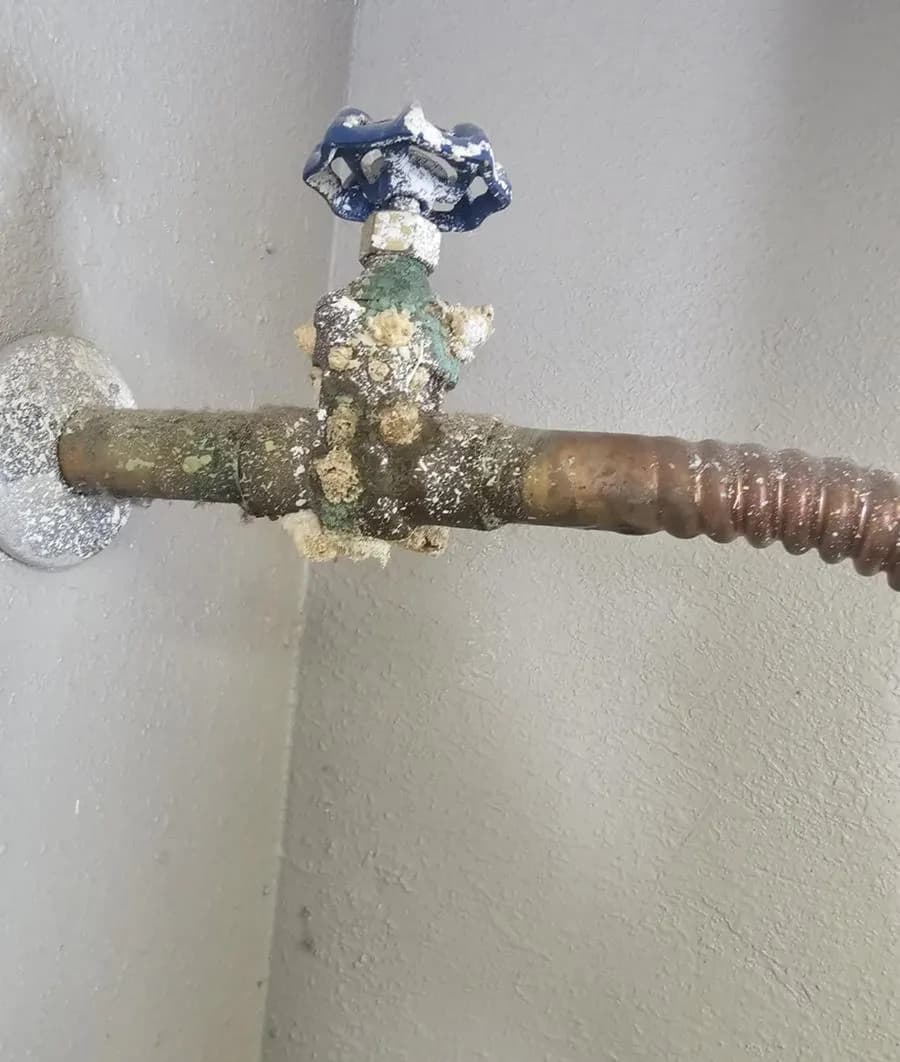
- Hardness. Separate from safety, our water is very hard. The USGS estimates about 85% of U.S. homes have hard water, and Arizona sits right at the top of that scale — which is why your fixtures crust up and your water heater works overtime.
None of this means the sky is falling. It means “safe by the standard” and “exactly what you want your 90-year-old grandma sipping every day” can be two seperate things — and the gap is worth understanding.
Why Mesa Homeowners Ask Us About This So Often
After four decades of knocking on doors here, we’ve tested a lot of Mesa water. What we see is that most homes are perfectly fine on the safety basics, but plenty of families still want cleaner, softer, better-tasting water than the tap delivers — especially for drinking, cooking, and coffee. That’s not fear; that’s just preference, and it’s a reasonable one. Our founder John started this whole company chasing better water for his own family, and that’s definately still the heart of what we do.
It also helps to have someone in your corner who actually knows the subject. JB Water & Air has a staff member with over 30 years of experience as a licensed professional engineer working on water quality issues with private and public agencies. When we test your water, you’re getting a real read from real expertise — not a sales pitch dressed up as science.
How to Know Where Your Own Home Stands
Two easy steps. First, look up your utility’s annual water quality report — every public system in Arizona publishes one. Second, test the water actually coming out of your tap, because what leaves the treatment plant and what arrives at your house (through your pipes, your softener, your neighborhood’s lines) can differ. We’ll come do that test for you, explain it in plain English, and lay out your options with no pressure.
If you decide you want to do something about it, the common solutions are a whole-home water treatment system (a softener for the hardness plus a reverse-osmosis system for clean drinking water). You can dig deeper in our guides on what hard water really means for Mesa homes, why a whole-house filtration system is worth it, and water contamination in Arizona. And if you just want great drinking water to start, our Pure Water page walks through the options.
Want to know exactly what’s in your Mesa water? Get a free, no-pressure water test from the team that’s served the Valley for 40 years. Call JB Water & Air: (480) 969-3193
Frequently Asked Questions
Is Mesa, AZ tap water safe to drink?
Yes, for basic safety. Mesa’s municipal water is treated to meet EPA safe-drinking-water standards, which are very effective against disease-causing pathogens. Many homeowners still choose filtration for hardness, taste, and contaminants that aren’t fully removed by standard treatment.
What contaminants are in Arizona drinking water?
Common ones include disinfection byproducts like TTHMs (created during chlorination), naturally occurring minerals and trace metals such as arsenic in some groundwater, and PFAS “forever chemicals” in parts of the Phoenix metro. Hardness from calcium and magnesium is also very high across the Valley.
What is the new EPA limit for PFAS in drinking water?
In April 2024 the EPA finalized the first enforceable national drinking water limits for PFAS, setting the maximum for PFOA and PFOS at 4 parts per trillion each — far stricter than the older 2016 health advisory of 70 parts per trillion.
How do I find out what’s in my home’s water?
Start with your utility’s annual water quality report, then have your tap water tested at the home itself, since your pipes and neighborhood lines can change what actually reaches you. JB Water & Air offers free in-home water testing across Mesa and the East Valley.
- U.S. EPA — PFAS in Drinking Water
- Federal Register — PFAS National Primary Drinking Water Regulation (2024)
- U.S. EPA — Disinfection Byproducts Rules
- CDC — About Drinking Water
- CDC — Drinking Water Standards & Regulations
- Arizona Department of Environmental Quality
- USGS — Water Hardness in the United States