How Does a Heat Pump Work in Arizona?
A heat pump moves heat instead of making it. How the reversing valve lets one system both heat and cool, and what an Arizona climate changes.
By JB Water & Air · Published September 4, 2026 · 6 min read
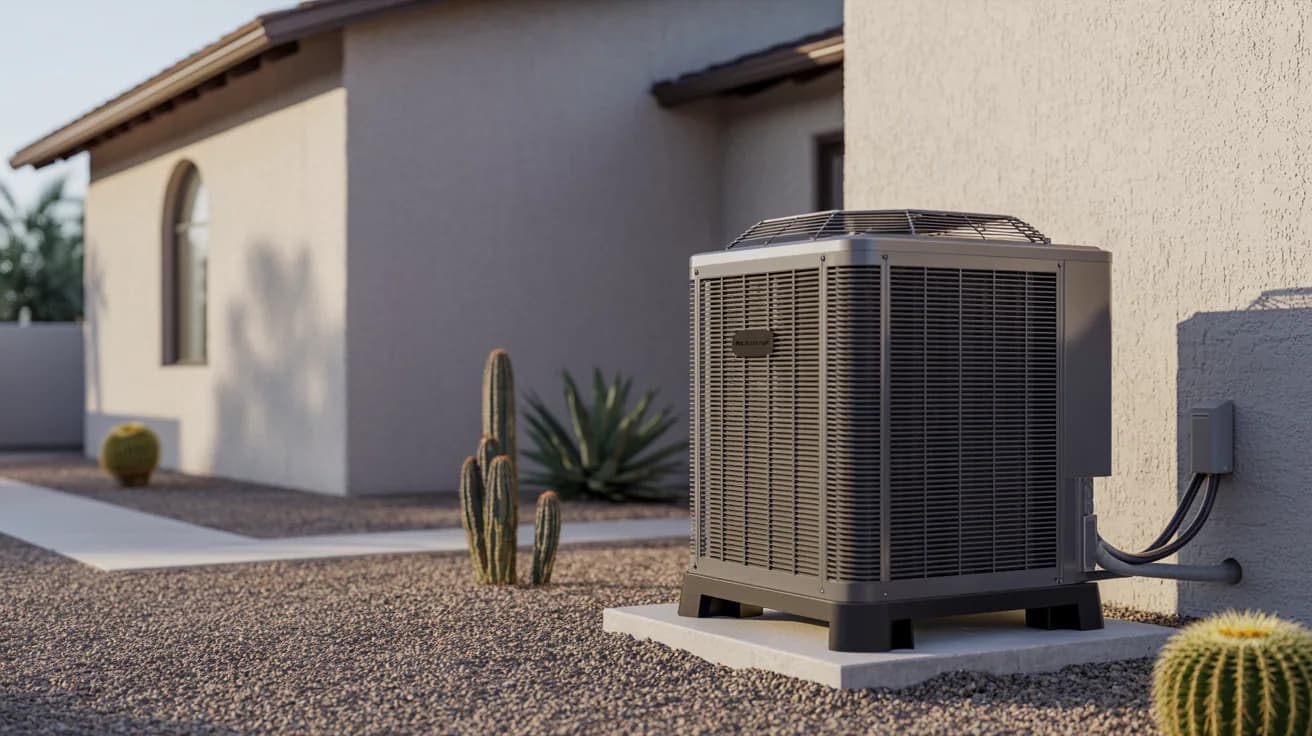
A heat pump does not create heat. It moves heat that already exists from one place to another, and a valve inside it decides which direction that movement runs. That one design choice is why a single outdoor unit can cool a house in July and heat it in January. If you already understand an air conditioner you already understand most of a heat pump; the rest is one extra component and one reversal.
Moving heat instead of making it
Refrigerant absorbs heat where it evaporates and releases heat where it condenses. A compressor raises its pressure and temperature and a metering device drops it back down, so the coil doing the absorbing is always colder than whatever surrounds it. Heat only ever moves from the warmer side to the cooler side.
In cooling, the indoor coil is the cold one. It absorbs heat from house air and the outdoor coil dumps that heat into the yard. Nothing is destroyed; the heat is relocated.
In heating, the same hardware runs the other way. The outdoor coil becomes the cold one, collecting heat from outdoor air even when that air feels cold to you, and the indoor coil releases it indoors. Air at 45 degrees still holds a large amount of heat energy, and it only has to be warmer than the refrigerant in that coil for the transfer to work.
The reversing valve is the whole trick
The component that makes both modes possible is the reversing valve, a four-port valve in the outdoor unit that swaps which coil receives high-pressure refrigerant from the compressor. Energize it or de-energize it and the indoor coil switches from absorbing heat to rejecting it. Everything else stays where it was. That is the entire difference in hardware terms: same compressor, same coils, same refrigerant, plus a valve and the control logic that knows which mode was called for.
Because moving heat is not the same as generating it, a heat pump can deliver more heat energy into a house than the electrical energy it draws. Electric resistance heat cannot: a strip heater turns a unit of electricity into a unit of heat and no more. That advantage narrows as outdoor air gets colder, because there is less heat available to collect.
Heat pump vs air conditioner
An air conditioner is a heat pump that only runs one way. In a conventional pairing it sits alongside a separate heat source, most often a gas furnace sharing the same ductwork and blower. Two appliances, two fuel paths, one air distribution system. A heat pump collapses that into one appliance on one fuel, which means a fault in the shared compressor, blower or duct now affects both seasons rather than one. Three other differences follow:
- No combustion on the heating side. No gas line, no flue, no combustion air requirement, and none of the winter diagnosis that comes with burners and venting.
- Supply air feels different. A furnace delivers noticeably hot air in short bursts. A heat pump delivers warm air over longer runs. Homeowners new to one often report that the register feels cool while the system is working exactly as designed.
- Backup heat is usually electric. Most heat pump air handlers include resistance heat strips for the coldest conditions and for defrost. Those strips draw far more power than the compressor, so a system stuck on backup heat tends to show up on a power bill before anyone notices a comfort problem.
What an Arizona climate changes
Mesa winters are mild, and mild is the condition these systems handle most comfortably. The temperatures where an air source heat pump loses meaningful capacity sit well below what the East Valley normally sees, so the heating side of the argument is less contested here than in a cold climate.
Summer is the real constraint. Equipment in the Valley is sized around a cooling load that runs near design conditions for months, and heating capacity arrives as a consequence of that decision. Judge sizing on the cooling season, then confirm the heating output suits the house. Three local conditions matter more than the mild winter does:
Dust. Monsoon storms and haboobs pack fine caliche dust into outdoor coil fins. On an air conditioner a fouled coil shows up as poor cooling. On a heat pump the same coil degrades both seasons, because it rejects heat in summer and collects it in winter.
Run hours. The outdoor unit no longer sits idle from November through March. Compressor hours accumulate in both directions, so wear becomes a function of total operation rather than one season. Everything that shapes how long AC units last in Arizona applies here with the winter hours added on.
Older housing stock. Much of Mesa’s housing predates current duct and insulation practice. A heat pump moves a larger volume of moderately warm air than a furnace does, so leaky, undersized or poorly insulated ducts show up faster in heating mode than most homeowners expect.
When heating mode specifically fails
A heat pump can cool perfectly and still fail to heat, because heating uses components and logic that cooling does not. Symptoms worth reporting exactly as you observe them:
- The house gets colder on a call for heat. A reversing valve stuck in the cooling position, or a control fault around it, produces precisely this. Say so when you book; it narrows the diagnosis immediately.
- Register air is barely warm and the room never catches up. Warm rather than hot is normal. Lukewarm air that fails to raise the room points at charge, airflow, or a compressor not carrying its share.
- Only the backup heat is running. If the outdoor unit stays silent in heating but the house still warms, the strips are carrying the entire load. That works, it draws far more power, and it usually means the compressor side has a fault.
- The thermostat is sitting on emergency heat. Somebody may have switched it there during an earlier problem and left it. Check that before assuming a failure.
- The outdoor coil ices over and stays iced. Frost during heating is expected, and defrost is supposed to clear it. Ice that persists means defrost is not completing. Vapor rising off the unit as frost melts, by contrast, is normal.
Switch the system off and call if there is a burning smell, a breaker that trips repeatedly, damaged wiring, or water near electrical parts. Do not open the outdoor cabinet; capacitors hold a charge after the power is off.
What to have ready when you call
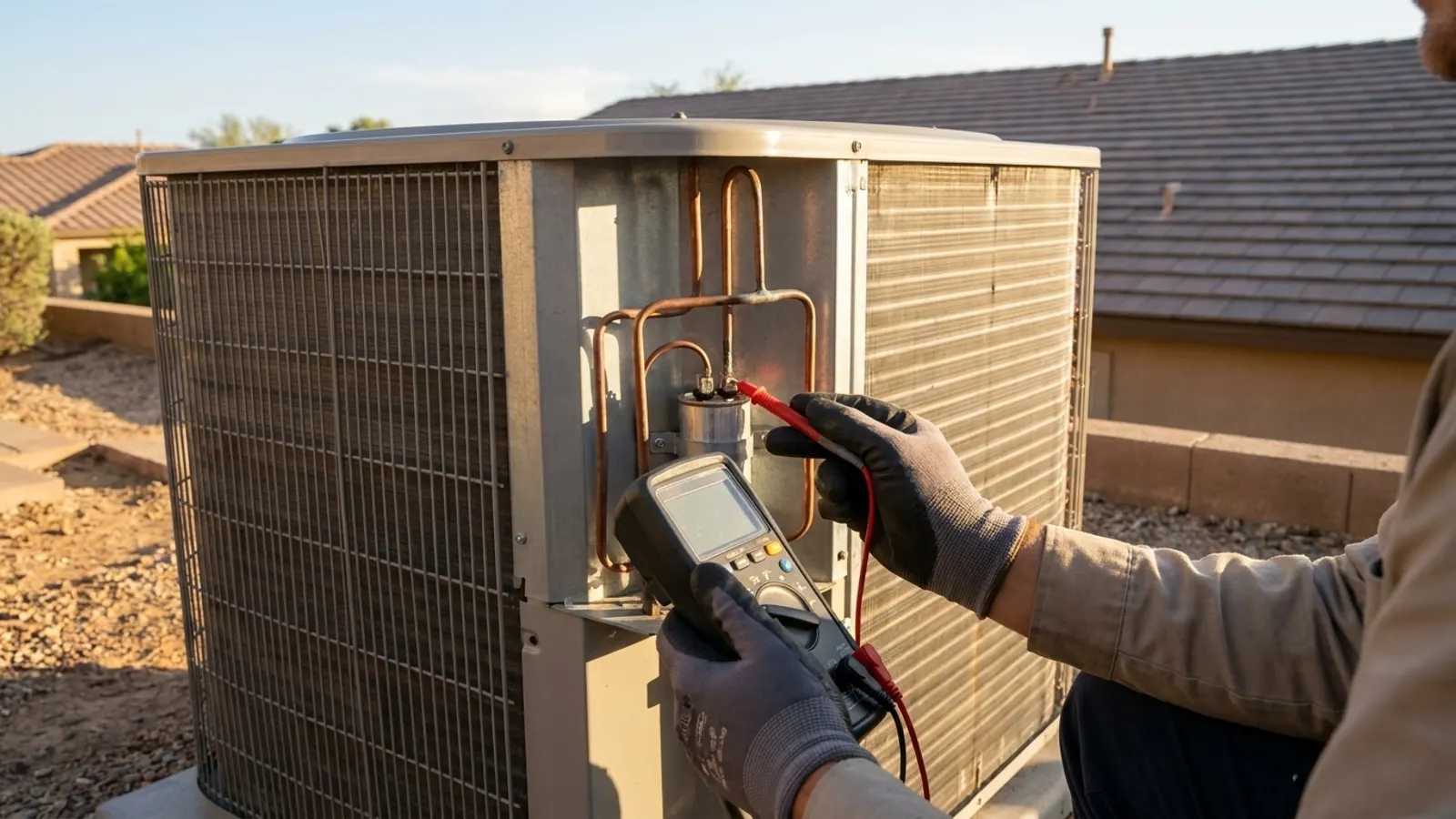
Both modes share most of their hardware, so a heating complaint is worked through with the same discipline as AC repair: confirm the system is actually being asked to run, measure the electrical side before condemning a motor, check airflow before drawing conclusions about refrigerant. Have the model and serial numbers, the thermostat mode, whether the outdoor unit runs at all, and when the symptom appeared. Because one machine now carries both seasons, planned service covers more ground than it did with cooling-only equipment, and what a visit should itemize is set out in what changes the cost of AC maintenance in Mesa. The service path for this equipment is heat pump repair in Mesa.
JB Water & Air is a family owned Mesa company serving the East Valley since 1981. HVAC work is provided under Arizona license ROC #341937, classification CR-39. To describe a heating or cooling symptom and ask whether it falls within current scope, contact JB Water & Air at (480) 969-3193.
Frequently asked questions
- How does a heat pump work?
- It moves heat rather than creating it. Refrigerant absorbs heat at one coil and releases it at the other, and a reversing valve decides which coil does which job. In cooling it pulls heat out of the house; in heating it collects heat from outdoor air and releases it indoors.
- What is the difference between a heat pump and an air conditioner?
- An air conditioner only runs in one direction and needs a separate heat source, usually a furnace on the same ductwork. A heat pump adds a reversing valve so the same compressor and coils handle both seasons. The hardware is otherwise close to identical.
- Do heat pumps work in Arizona winters?
- Mild winters are the condition air source heat pumps handle most comfortably, because there is still ample heat in the outdoor air to collect. The temperatures where these systems lose capacity are far below what the East Valley normally sees. Sizing here is still driven by the cooling season.
- Why is my heat pump blowing cool air in heating mode?
- Heat pump supply air is warm rather than hot, so cool-feeling air is not always a fault. It becomes one when the room never warms, when only the backup heat strips are running, or when the system is actively cooling on a call for heat, which suggests a reversing valve or control problem.