Heater Not Working in Mesa? What to Check First
Safe checks before you call: thermostat mode and batteries, the breaker, the filter, furnace or heat pump, and the point where troubleshooting stops.
By JB Water & Air · Published September 4, 2026 · 5 min read
A heater that will not run gets reported as one symptom, but it splits into two: the system is not being asked to heat, or it is being asked and cannot. Four checks separate those, and all four sit outside the equipment cabinet. Everything past them belongs to a technician.
If you smell gas, stop reading and leave
If there is a smell of gas anywhere in the house, none of the checks below apply. Get everyone outside, and call the gas utility from outside the building once you are clear of it. Do not operate light switches, touch the thermostat, or go looking for the source on the way out.
A gas appliance is never a homeowner troubleshooting project. The gas valve, igniter, flame sensor, heat exchanger and flue are interlocked, and a fault in one of them is what those interlocks exist to catch. The same rule covers a carbon monoxide alarm: leave the building, then call emergency services from outside.
1. The thermostat, in more detail than you expect
This is the first place to look, and Mesa is the reason: a thermostat can sit in COOL from March to October untouched. Set the mode to HEAT, set the target several degrees above room temperature, and wait. A short delay before the equipment responds is normal.
Then check the batteries: a battery-powered thermostat can go blank, dim, or lose its settings while the equipment behind it is healthy. Two other settings mislead people. A fan set to ON rather than AUTO runs the blower continuously and pushes room temperature air between heating cycles, which feels exactly like a heater blowing cold. And a thermostat that lost power may have reverted to a schedule you did not set.
2. The breaker, once
Even a gas furnace needs electricity for its blower, controls and ignition. There are usually two circuits, one indoor and one for the outdoor unit, plus a service switch near the equipment that looks like an ordinary light switch and gets turned off by accident.
Reset a tripped breaker once: fully off, then firmly on. If it trips again, leave it off and call. A breaker that keeps tripping is doing the one job it has, and repeated resets are how an electrical fault becomes a fire.
3. The filter
A loaded filter starves the blower, and in heating that matters more than most homeowners realize. A furnace with restricted airflow can overheat and shut down on a safety limit, which the occupant experiences as heat that starts, runs briefly, then quits. Repeat that and the control may lock out.
Filters here load faster than the printed interval suggests, because monsoon dust reaches every return in the Valley and a haboob can load a fresh filter in a single afternoon. Replace with the same size and type, arrow toward the equipment. If it comes out gray and the system then runs, that is a maintenance interval telling you it is wrong.
4. Which system you actually have
Most guides skip this, and it changes both what can be wrong and what you say when you call. Without opening anything:
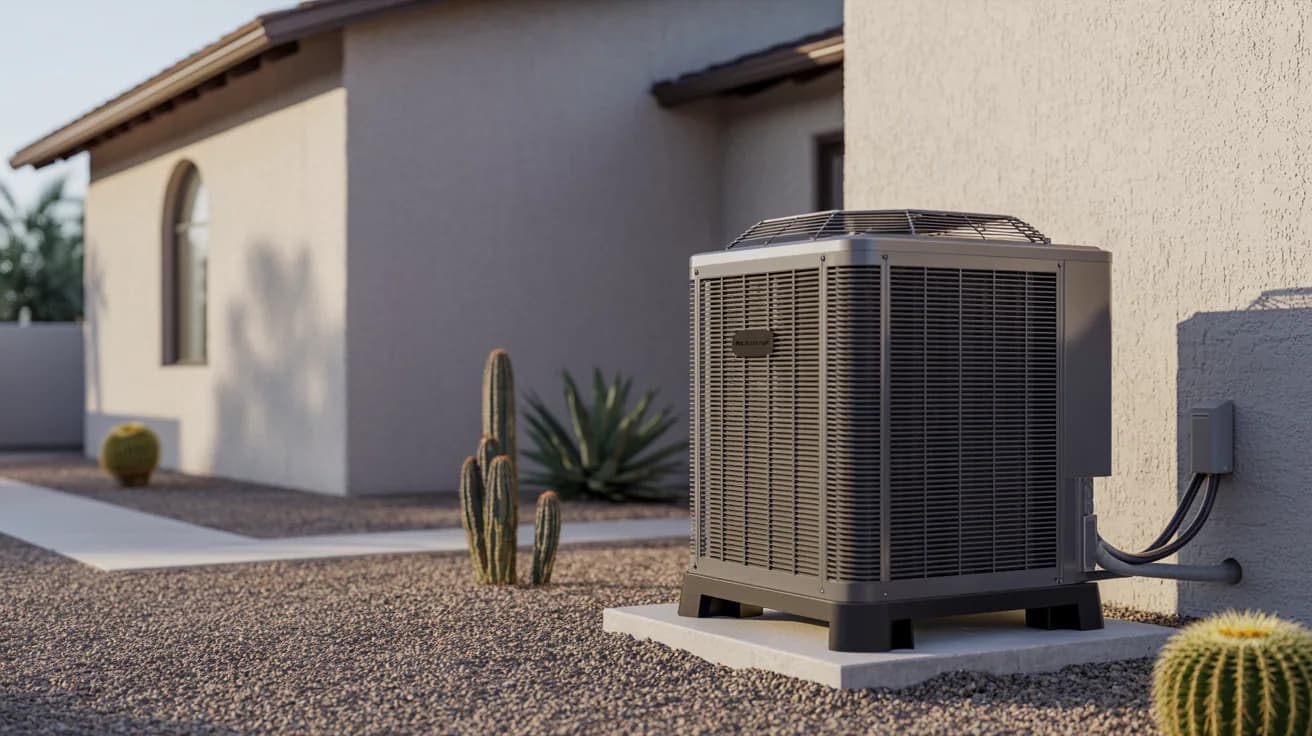
- With the heat calling, step outside. A running outdoor unit means a heat pump. A furnace heats entirely indoors and leaves the outdoor unit still.
- Look at the thermostat. A control offering EMERGENCY HEAT or AUX HEAT is wired for a heat pump.
- Look at the indoor equipment. A gas furnace has a flue rising out of it, a gas line with a shutoff valve, and a sealed burner compartment. An air handler serving a heat pump has none of those.
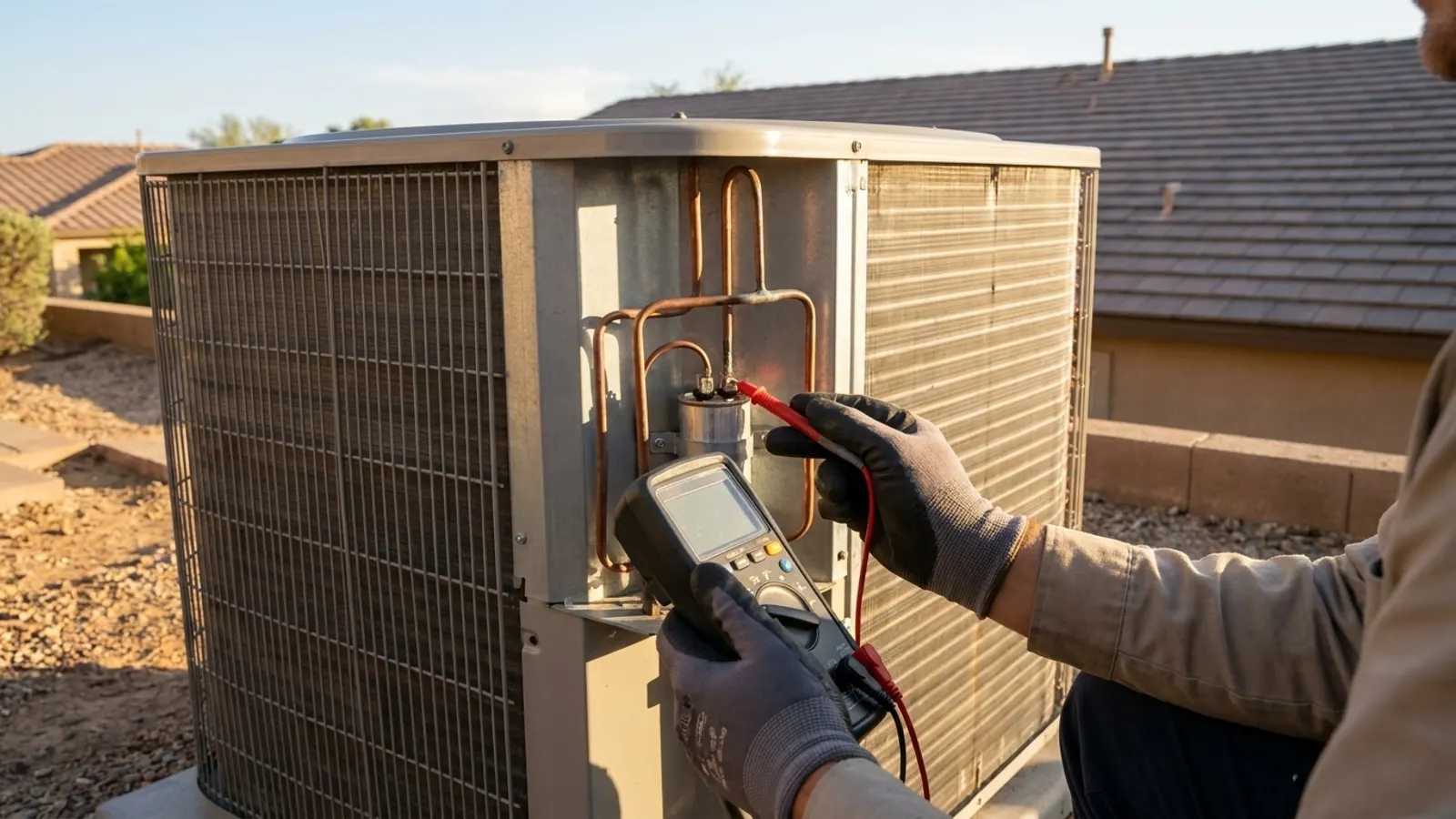
A heat pump is the machine that cools the house in July, run in reverse by a valve inside it, which is why heating and cooling faults so often meet on the electrical side; those parts get measured in the order set out on the AC repair page. It also explains two normal behaviors: heat pump air feels cooler against your hand than furnace air, and a heat pump will pause heating to steam outside for a few minutes, which is a defrost cycle.
The burning smell on the first cold morning
Almost always dust. Months of it settle on a heat exchanger or on electric heat strips that have not run since February, and the first heating cycle of the season burns it off. The signature is faint and dusty, strongest in the first few minutes, fading within a cycle or two, on the first run only. Open a window and let it clear.
What is not that: a sharp electrical or hot plastic smell, visible smoke, a smell still present after the first hour or returning days later, or one alongside a tripping breaker or a scorch mark. Switch the system off and call.
Where the homeowner checks end
Stop and hand it over for any of these:
- a smell of gas or a carbon monoxide alarm, having left the building first;
- a breaker that trips a second time;
- a burning or electrical smell that is not first-of-season dust;
- water or ice at the equipment;
- a system that starts and shuts itself down repeatedly;
- a flashing fault light or a code on the control board; or
- anything that needs a panel removed to see.
Write the code or blink pattern down before resetting anything. A reset erases it, and the pattern is specific to that model.
Why this is a September question
Mesa's heating season is short and late. Real demand arrives around November and is mostly done by February, so a heater that quietly failed in spring will not announce itself until the first properly cold night, when every other household finds out at the same time. Twenty minutes of heat on a mild September afternoon moves that discovery onto your schedule.
A heat pump has also just spent an Arizona summer under full cooling load, and that load is what finds tired components, so a winter no-heat call is often summer wear surfacing late; how long AC units last in Arizona covers what shortens or extends that life here. Older Mesa homes also put the equipment in an attic or closet, where a limit shutdown from a blocked return repeats for weeks before anyone connects it to the filter. The seasonal version of these checks is the Mesa HVAC maintenance checklist.
What to have ready when you call
Have ready: the thermostat reading and mode, whether the indoor blower runs, whether the outdoor unit runs, any code at the equipment, the make and model from the label, and which checks above you have done. That tells the technician which branch of the diagnosis to start on.
JB Water & Air repairs, maintains and installs heating systems of all types, whether the house has a furnace, a boiler or a heat pump, under Arizona license ROC #341937, classification CR-39 air conditioning. The company is family owned and has served Mesa and the East Valley since 1981. To describe a symptom, see heating repair in Mesa or call (480) 969-3193.
Frequently asked questions
- Why is my heater not working?
- Start by separating a system that is not being asked to heat from one that is asked and cannot. Thermostat mode, thermostat batteries, a tripped breaker or a service switch left off account for a large share of no-heat calls. A loaded filter is next, because restricted airflow can shut a furnace down on a safety limit.
- Why does my heater smell like burning when I first turn it on?
- Usually dust burning off a heat exchanger or electric heat strips that have sat idle since winter. The signature is faint and dusty, strongest in the first minutes, fading within a cycle or two, and only on the first run of the season. A sharp electrical smell, visible smoke, or an odor that persists or returns is different: switch the system off and call.
- How do I know if I have a furnace or a heat pump?
- Step outside while the heat is calling. A running outdoor unit means a heat pump; a furnace heats entirely indoors. A thermostat offering emergency or auxiliary heat is wired for a heat pump. A gas furnace has a flue rising from it, a gas line with a shutoff, and a sealed burner compartment, and an air handler has none of those.
- Should I reset the breaker if my heater stopped?
- Reset it once, fully off then firmly on. If it holds and the heat runs, note what happened and mention it at the next service visit. If it trips again, leave it off and call. A breaker that keeps tripping is doing the only job it has, and repeated resets turn an electrical fault into a fire risk.
- Why does my heat pump blow air that feels cool?
- Air leaving a heat pump register is normally cooler against the hand than furnace air, because the refrigeration cycle delivers a smaller temperature rise over a longer run. A heat pump also pauses heating to run a defrost cycle, steaming outdoors for a few minutes before resuming. Neither behavior is a fault on its own.
- What should I do if I smell gas near the furnace?
- Leave the building first and take everyone with you. Call the gas utility from outside, once you are clear of the property. Do not operate light switches, do not adjust the thermostat, and do not try to find the source on the way out. A gas appliance is never a homeowner troubleshooting project.